Your complete guide to Red Light Therapy: Your Questions Answered
Revive Restore Repair offers clinical red light therapy (photobiomodulation, PBMT) in Stratford-upon-Avon — the only PBMT clinic in the town. Treatment uses specific wavelengths (630–940nm) at clinical power densities to stimulate tissue repair, reduce inflammation, and support skin collagen. Strong evidence for recovery, wound healing, and skin health; emerging evidence for menopause and joint inflammation. Sessions from £31.95, no GP referral needed, bookable directly online.
What is Red Light Therapy? ( And Why Clinical Grade Matters )
Let’s deal with the elephant in the room first.
You’ve probably seen LED face masks on Amazon for £40. Red light “therapy” wands. Handheld devices with blinking lights that promise to fix everything. So is what happens in a clinical setting actually different?
Yes — and the difference matters.
Clinical red light therapy uses specific wavelengths of light (typically 630–940nm, spanning red and near-infrared) delivered at a precise power density (measured in mW/cm²). At these parameters, light photons penetrate skin and soft tissue to reach mitochondria — the energy-producing structures inside your cells. When mitochondria absorb this light, they produce more adenosine triphosphate (ATP), the cellular fuel that drives tissue repair, collagen synthesis, and inflammation control.
The correct term for this is photobiomodulation (PBMT) — and it’s been researched since the 1960s. NASA used early-stage PBMT to support wound healing during long-duration spaceflight, where the body’s normal repair mechanisms slow down without regular gravity and sunlight exposure. It is not a beauty salon treatment or a wellness trend. It’s applied photobiology with a growing peer-reviewed evidence base.
The problem with consumer devices isn’t that the concept is wrong. It’s that the delivery is inadequate: insufficient power density, imprecise wavelengths, and limited coverage area mean the therapeutic dose never reaches the target tissue. A clinical full-body PBMT session delivers the irradiance and dwell time that research protocols use. A home device typically doesn’t.
This isn’t elitist — it’s physics.
What Can Red Light Therapy Help With?
PBMT works because it operates at the cellular level. The outcomes depend on what tissue you’re targeting and why.
Recovery and Muscle Repair
Red light therapy accelerates the clearance of metabolic waste products and reduces delayed onset muscle soreness (DOMS). Multiple peer-reviewed trials confirm this. Professional and elite athletes use PBMT as part of recovery protocols between training sessions or post-competition. At RRR, it can be combined with Cryotherapy in the same visit: cryo reduces acute inflammation; red light supports tissue-level repair. Different tools, different stages of the recovery cascade.
Skin: Collagen, Wound Healing, and Scarring
PBMT stimulates fibroblasts — the cells responsible for collagen and elastin production. This is the most thoroughly researched application: peer-reviewed evidence supports red light for wound healing acceleration, reduction of scar tissue, and improvement in skin elasticity and texture. It’s not cosmetic in the superficial sense. Collagen remodelling is a structural repair process.
Menopause: Collagen, Tissue, and Inflammation
This is the section no local competitor has written — and it matters for a significant proportion of RRR’s patients.
Oestrogen regulates collagen synthesis. As oestrogen declines during perimenopause and menopause, collagen production falls — skin thins, wound healing slows, and connective tissue becomes less resilient. The urogenital tissues (see Pelvic Floor Treatment Guide for detail) are particularly affected. Joints become more inflamed: arthralgia — joint pain with no obvious injury — is one of the most common and underrecognised menopausal symptoms.
Red light therapy addresses the structural side of this directly. PBMT stimulates fibroblast activity and collagen synthesis regardless of hormonal status — it bypasses the oestrogen mechanism and drives the output directly. For women in perimenopause or post-menopause experiencing skin changes, joint inflammation, or poor tissue recovery, PBMT provides a non-hormonal route to supporting the same outcomes oestrogen previously maintained.
The British Menopause Society and RCOG increasingly recognise the role of lifestyle and complementary interventions in managing menopausal symptoms. The collagen-synthesis pathway is one of the most evidence-grounded of these.
At RRR, Abi works regularly with menopausal women. Combining red light with Pelvic Floor treatment (HIFEMS) creates a protocol that addresses both the structural urogenital changes and the systemic collagen decline — a combination no other clinic in Warwickshire offers.
Inflammation and Joint Pain
For people managing chronic inflammatory conditions — arthritis, tendinopathy, post-injury inflammation — red light therapy provides a mechanism for sustained, low-grade anti-inflammatory effect at the tissue level. Unlike NSAIDs, there’s no systemic pharmacological load. The mechanism (ATP production → reduced oxidative stress → reduced inflammatory cytokine signalling) is well-documented in the photobiomodulation literature.
Wellbeing: Mood and Energy
Some evidence suggests PBMT improves mitochondrial function broadly — increased cellular energy, improved sleep quality, and mood enhancement. The mechanism (better cellular energy production) is plausible. The evidence is emerging and more variable than the wound-healing or collagen data. We mention it here because patients report it consistently — but we won’t overclaim. For this outcome, HBOT may have a stronger evidence base.
Red Light Therapy Providers Near Stratford upon Avon
If you’re looking for clinical PBMT in Warwickshire, your local options are limited.
- Revive Restore Repair ⭐ Based in Stratford-upon-Avon
Location: Stratford-upon-Avon Device type: Clinical full-body PBMT Session length: 15mins Price: From £31.95 Booking: reviverestorerepair.co.uk
RRR is the only red light therapy clinic based in Stratford-upon-Avon itself. For anyone in Stratford, Alcester, Shipston-on-Stour, Henley-in-Arden, or rural south Warwickshire, this is your nearest option for clinical PBMT. The clinic also offers HBOT and cryotherapy — the only clinic in the area where you can combine all three therapies in a single visit. Abi can advise on protocols for specific conditions.
- ReGen Rooms (Leamington Spa, 8 miles)
Location: Leamington Spa Device type: Full-body PBMT bed Distance from Stratford: ~8 miles
ReGen Rooms is a legitimate clinical PBMT provider in Leamington Spa. They operate a well-regarded clinical device and their content and SEO reflect a serious operation. If you’re based in Leamington or Warwick (and closer to them), they’re a credible option. If you’re in Stratford, RRR is the closer clinic, and the ability to combine red light with HBOT and cryotherapy in one visit is a meaningful differentiator.
- Caroline Conrad (Stratford area — aesthetic focus)
Location: Stratford-upon-Avon area Device type: Aesthetic light therapy panels Note: Cosmetic rather than clinical focus
Caroline Conrad’s practice offers LED light therapy in a skin aesthetics context — primarily for cosmetic outcomes (skin tone, acne, anti-ageing). If cosmetic skin work is your primary goal, this is worth exploring. For clinical applications (recovery, inflammation, menopause, wound healing), a full-body PBMT device at the correct clinical power density is a different tool.
The Clinical vs Consumer Grade Question
People ask this more than any other question about red light therapy. It’s a fair one.
The typical first reaction: “I’ve seen these on Amazon. How is this different?”
Here’s the honest answer.
Consumer red light devices — face masks, handheld wands, small panels — use the right wavelength range (if they’re well-made) but almost always deliver insufficient irradiance (power per unit area) to produce therapeutic tissue effects. A few milliwatts per square centimetre, applied to a small area for 10 minutes, does not deliver the same photonic dose as a clinical full-body device running at therapeutic irradiance for a full session.
The photobiomodulation literature specifies the dose-response relationship clearly: too little dose, no therapeutic effect. The correct dose, delivered consistently, produces measurable outcomes. The challenge with consumer devices is that most don’t publish their actual irradiance figures — and those that do often measure at the device surface, not at tissue depth.
This isn’t about brand snobbery. It’s about physics and dosimetry.
Clinical PBMT devices are calibrated and validated against the research parameters. They cover the full body (not just the area you can hold a small panel against). And sessions are long enough to deliver the cumulative dose that produces the outcomes the research documents.
If you’ve tried a home device and felt nothing, this is probably why.
Combining Red Light Therapy with Other Therapies
This is where RRR becomes genuinely unique in the Warwickshire area.
Red light + HBOT (Tissue Repair + Cellular Energy) PBMT increases ATP production at the cellular level. HBOT increases the oxygen available to drive those cellular processes. Together, they create a cellular environment optimised for repair: more fuel, more building material. Used for post-surgical recovery, chronic tissue injury, and menopausal tissue health. ReGen Rooms cannot offer this combination — they don’t have HBOT. RRR does.
Red light + Cryotherapy (Recovery Protocol) Contrast therapy — thermal stress and photobiomodulation — is used by elite sports teams and recovery clinics worldwide. Cryotherapy reduces acute inflammation and metabolic waste; red light drives tissue-level repair and mitochondrial recovery. Both at RRR, same visit. One of the strongest recovery protocols available outside a professional sports facility.
Red light + Pelvic Floor (Menopause Protocol) For women managing urogenital changes, pelvic floor dysfunction, or hormonal tissue health: HIFEMS pelvic floor treatment addresses muscle function and strength; red light PBMT supports the underlying collagen and tissue structure. A combined protocol that addresses the problem from both angles. No other clinic in Warwickshire offers this combination. See the Pelvic Floor Treatment Guide for detail on GSM, menopause, and Emsella.
Pricing and Sessions
Single session: From £31.95 Revive Pass: 20 sessions / any mix of therapies / 30 days / £575 (£28.75/session)
How many sessions do you need?
| Goal | Typical Protocol |
| Skin health and collagen | 1–2 sessions/week for 4–8 weeks, maintenance monthly |
| Sports recovery (ongoing) | 1–2 sessions/week during training blocks |
| Post-surgical or injury recovery | 8–15 sessions over 3–5 weeks |
| Menopause (collagen/tissue) | 8–12 session course, then monthly maintenance |
| Inflammation management (chronic) | 10–20 sessions, protocol based on condition |
| General wellness / try it | Single session to start |
A single session is the lowest-risk way to understand how PBMT feels and whether it suits your goals. Most people notice skin warmth during the session (normal) and report improved energy and reduced muscle tension in the hours after.
Frequently Asked Questions
What is red light therapy (PBMT)?
Red light therapy — clinically known as photobiomodulation (PBMT) — uses specific wavelengths of red and near-infrared light (630–940 nm) to stimulate cellular repair. It’s backed by over 5,000 peer-reviewed studies and is used in NHS physiotherapy departments, elite sport, and clinical rehabilitation worldwide.
How is clinical PBMT different from home devices?
Clinical devices deliver significantly higher irradiance (power density) across the full body. Home panels, masks, and wands typically lack the power to reach therapeutic dose at tissue depth. It’s the same concept — but the dose makes the difference.
What’s the difference between red and near-infrared light?
Red light (630–660 nm) is absorbed closer to the skin surface — ideal for collagen, wound healing, and skin health. Near-infrared (810–940 nm) penetrates deeper into muscle, joint, and connective tissue. Our full-body device delivers both simultaneously.
What does a session involve?
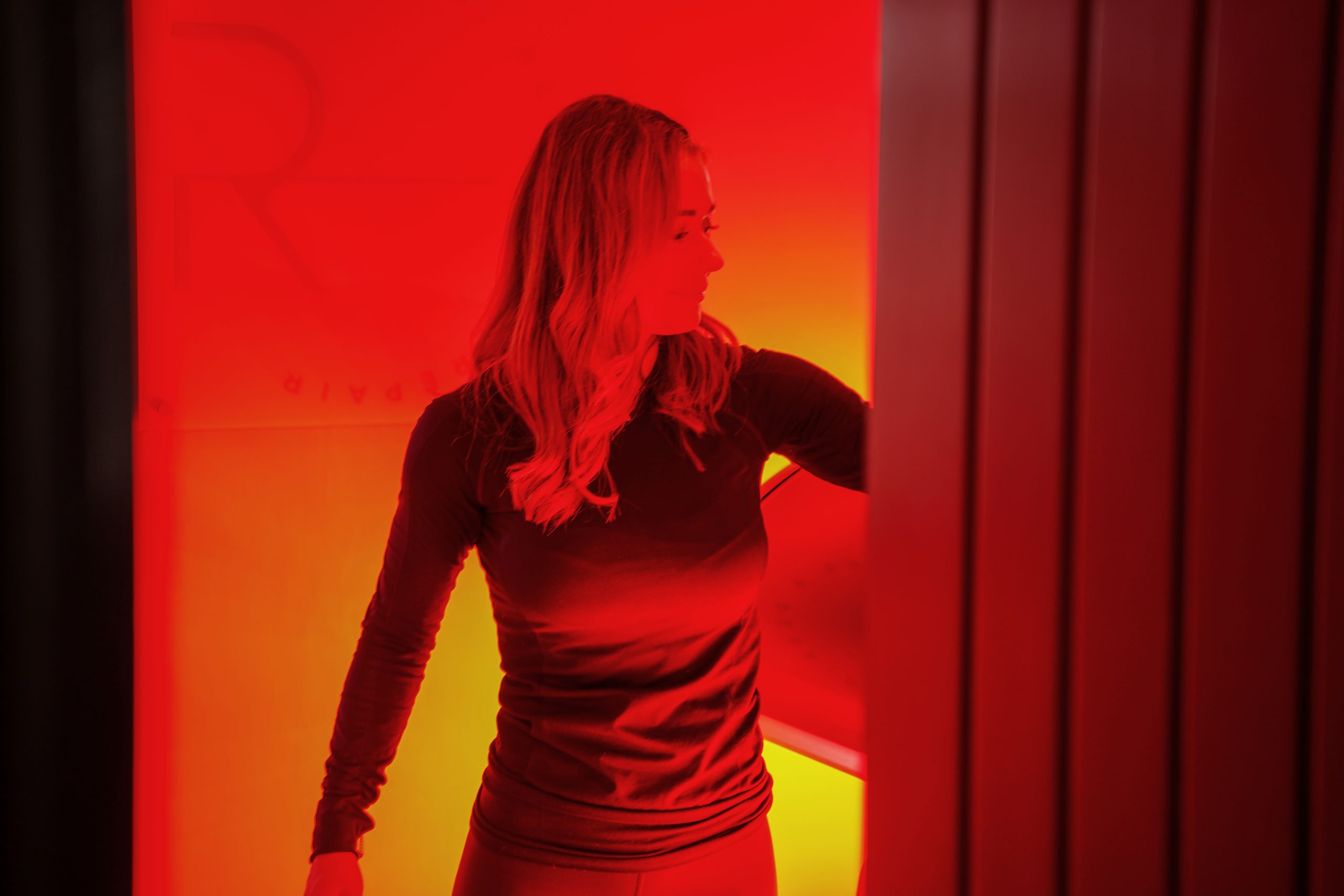
You lie in a full-body PBMT bed for around 15 minutes. There’s no heat, no UV, no downtime. Most people find it relaxing. You can wear underwear or a swimsuit — the more skin exposed, the better the coverage.
Is red light therapy safe?
Yes. PBMT is non-invasive and has no known harmful side effects when used as directed. It does not use UV light and does not heat tissue. It is widely used in clinical and rehabilitation settings.
What conditions can it help with?
The strongest clinical evidence supports PBMT for muscle recovery, wound healing, skin health (collagen and scarring), joint inflammation, and post-surgical repair. Emerging evidence also covers menopause-related tissue changes, tendinopathy, and chronic pain.
How much does it cost?
A single red light therapy session starts from £31.95. We also offer a Revive Pass — 20 sessions across any mix of therapies within 30 days for £575 (£28.75 per session).
How many sessions will I need?
It depends on the goal. Skin and collagen: typically 1–2 sessions per week for 4–8 weeks, then monthly maintenance. Sports recovery: 1–2 per week during training blocks. Post-surgical or injury: 8–15 sessions over 3–5 weeks. Abi will recommend a protocol based on your consultation.
Can I combine red light therapy with other treatments?
Yes — and it’s one of the advantages of visiting RRR. Red light pairs well with cryotherapy (cryo reduces acute inflammation; PBMT supports tissue-level repair) and with pelvic floor treatment for menopause protocols. All three therapies are available in the same visit.
Do I need a GP referral?
No. You can book directly online. If you have a specific medical condition, we recommend mentioning it during your free consultation so Abi can advise whether PBMT is appropriate and suggest the right protocol.
GET IN TOUCH
Book a free consultation
Every recovery journey is unique and we’ll create your tailored protocol adjusted to your needs — whether you need more oxygen therapy for healing, red light for tissue repair, or cryotherapy for energy and mood.

© 2026